Case File · PURSUE coverage
The Lake Huron Shootdown File: What DOW-UAP-PR071 Actually Shows
Updated July 7, 2026 · Alan E. Keene
The record
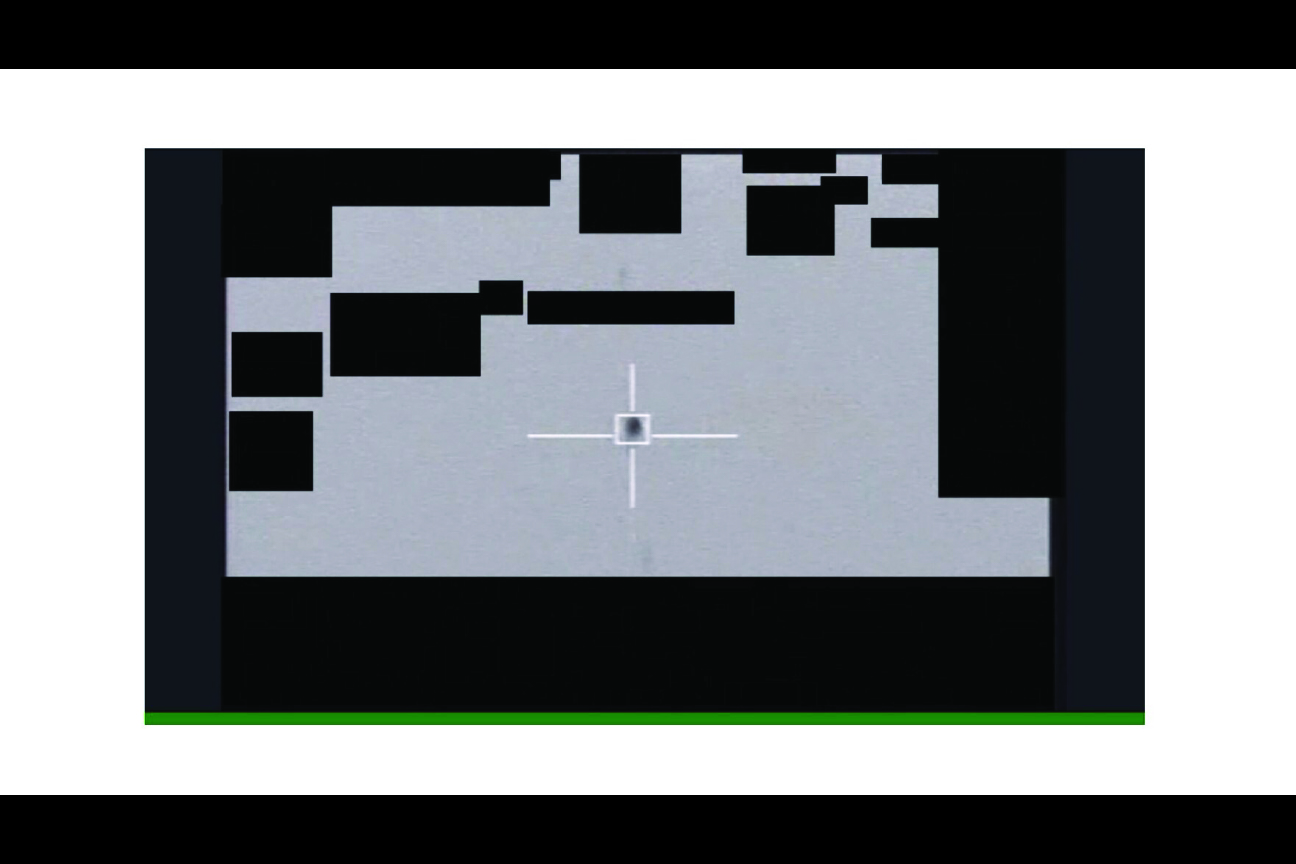
Of the 50 videos published in PURSUE Release 02 on May 22, 2026, none traveled further or faster than DOW-UAP-PR071: roughly forty-six seconds of infrared sensor footage showing a U.S. Air Force Air National Guard F-16C engaging — and downing — an unidentified object over Lake Huron. The record is filed by the Department of War in the unresolved category, and the release page catalogs it as an engagement case with recovered debris that, in the record's own careful wording, "did not lead to a definitive identification of the object as a conventional, man-made craft."
The full record — official imagery, the sensor footage, and a direct download of the source file from war.gov/UFO — is indexed in our file archive.
Timeline
February 2023. Over roughly one week, U.S. and Canadian forces track and shoot down several high-altitude objects over North America — the first live air-defense engagements over the continent in NORAD's history. The Lake Huron engagement, on February 12, is the last of the series. All of this was publicly reported and officially briefed at the time; what nobody outside the government had seen was the targeting sensor's view of it.
May 8, 2026. The PURSUE program begins publishing unresolved UAP records at war.gov/UFO.
May 22, 2026. Release 02 goes live with 50 new videos. PR071 is among them, and the All-domain Anomaly Resolution Office's accompanying assessment describes the footage as likely derived from a military platform's targeting sensor.
What the footage shows — and what it doesn't
The video itself is narrow in the way real sensor footage always is: an infrared track, an object held in the crosshairs, an engagement. It is not a cinematic record of the whole event. It does not show the object's arrival, the full intercept geometry, or the aftermath on the surface. Anyone telling you the clip alone proves what the object was — in either direction — is telling you more than forty-six seconds of IR video can support.
A correction, for the record: an earlier version of this article repeated a claim that the object accelerated "from hover to Mach 5+ in under 0.8 seconds." That figure does not appear in the published record, and we have not been able to trace it to any government document in the release. We've removed it. What the record supports is narrower and, frankly, still remarkable enough: a verified kinetic engagement between a U.S. fighter and an object the subsequent recovery effort could not definitively identify.
The debris question
The single sentence that keeps this file open is the one about recovery: the debris "did not lead to a definitive identification." That phrasing deserves neither inflation nor dismissal. On one hand, "not definitively identified" is not code for "exotic" — recovery over open water and winter ice is genuinely hard, debris is often incomplete, and an inconclusive forensic result is a common outcome of difficult salvage, not a smoking gun. On the other hand, this is the government's own filing, three years after the event, in a program specifically reserved for cases it says it cannot resolve. The simplest mundane explanation — a hobbyist balloon, which contemporaneous reporting in 2023 raised as a possibility for at least one of that week's objects — would ordinarily be easy to confirm from recovered material. Here, the record says confirmation never came.
Context: the February 2023 wave
PR071 doesn't stand alone. It is the sensor's-eye record of a week in which North American air defense went from never having engaged an object over the continent to doing it repeatedly — at a moment of maximum public attention following the Chinese high-altitude balloon transit. That context cuts both ways. It explains why interceptors were airborne and why radars were retuned to see slow, small targets they normally filter out; more sensitivity finds more objects, most of them boring. But it also means this engagement was among the most scrutinized air events in NORAD history, by crews and commanders with every incentive to identify what they shot — and the file is still marked unresolved.
Open questions
What the release does not answer: what the recovered debris physically was, and where it is now; why the object could not be identified given the resources applied; whether additional sensor tracks (shipboard, satellite, or the second aircraft's) exist and remain unpublished; and whether the redacted portions of the record contain a mundane resolution that simply hasn't cleared review. Release 03's document bundle added statistical context but no forensic follow-up on PR071. If Release 04 addresses any engagement forensics, this is the file to watch.
Our read
Our read: PR071 is the strongest single file in the PURSUE archive so far — not because it shows anything visually spectacular, but because every element around the mystery is documented: a real date, a real airframe, a real engagement acknowledged at the highest levels, real recovered material. (Confirmed by document.) The unresolved label most likely reflects a genuinely failed recovery rather than concealment. (Our speculation, and we hold it loosely.) Either way, this is the rare case where the skeptic and the believer are arguing about a single, checkable sentence in a government record — which is exactly what declassification was supposed to make possible.
Related records & reading
What "unresolved" actually means on a PURSUE file · The initial shootdown report · Iran 2022: the four-object formation video · Syria 2021: the "instant acceleration" recording · The full PR071 record in the archive ↗
← Back to the latest